
Java Script
JAVA SCRIPT Technology
JavaScript (JS) is a high-level, interpreted programming language that is widely used for both client-side and server-side web development. It was initially created to make web pages interactive and dynamic. Over the years, JavaScript has evolved significantly and is now one of the fundamental languages of the web alongside HTML and CSS.
Key Features and Characteristics of JavaScript
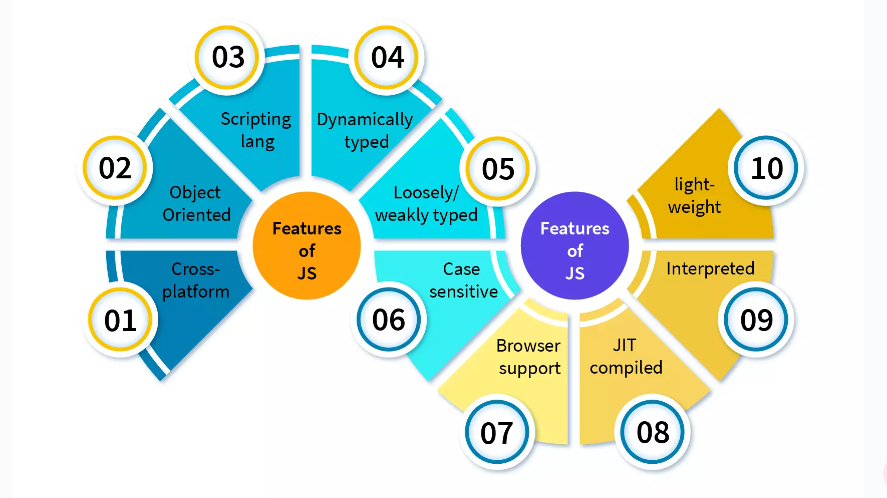
- Dynamic Typing: JavaScript is dynamically typed, meaning variables can hold values of any data type without explicit type declarations.
- Interpreted Language: JavaScript code is executed line by line (interpreted) by the JavaScript engine in the browser or server environment.
- Event-Driven: JavaScript is event-driven, meaning it responds to user actions (clicks, mouse movements) and executes code in response to these events.
4. Single-Threaded and Non-Blocking: JavaScript is single-threaded, meaning it can only execute one piece of code at a time. However, it employs non-blocking I/O operations, allowing it to handle multiple tasks asynchronously.
5. Prototype-based Object-Oriented Programming: JavaScript uses prototypal inheritance where objects can inherit properties and methods directly from other objects.
5. Prototype-based Object-Oriented Programming: JavaScript uses prototypal inheritance where objects can inherit properties and methods directly from other objects.
Uses and Applications of JavaScript
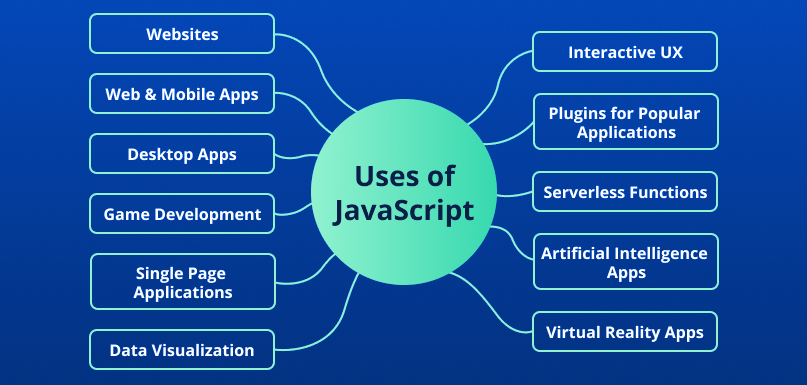
1. Client-side Web Development
- JavaScript is primarily used in web browsers to create interactive and dynamic user interfaces (UI).
- It manipulates and updates the DOM (Document Object Model) to change the content and style of web pages dynamically.
2. Server-side Development
- With Node.js, JavaScript can be used for server-side scripting and building scalable network applications.
- It allows developers to write JavaScript code that runs on the server, handling requests, interacting with databases, and performing server-side operations.
3. Web Application Development
- JavaScript frameworks and libraries like React, Angular, Vue.js, and jQuery facilitate the development of complex, responsive web applications.
- These frameworks provide tools for building UI components, managing state, and handling routing within single-page applications (SPAs).
4. Mobile App Development
- JavaScript frameworks such as React Native and Ionic enable developers to build cross-platform mobile applications using web technologies.
- They allow for code reuse across iOS and Android platforms, speeding up development and reducing maintenance efforts.
5. Game Development
- JavaScript, along with HTML5 Canvas and WebGL, supports browser-based game development.
- Game engines like Phaser.js and Three.js provide libraries and tools for creating interactive games directly in the browser.
6. Server-less Computing
- JavaScript is used in server-less computing platforms like AWS Lambda and Azure Functions to write server-side logic that runs in response to events triggered by cloud services or HTTP requests.
Java Script Advantages and Challenges
Advantages of JavaScript
- Versatility: JavaScript is versatile and can be used for both front-end and back-end development.
- Rich Ecosystem: It has a vast ecosystem of libraries, frameworks, and tools that simplify and accelerate development.
- Speed: JavaScript executes client-side code directly in the browser, reducing server load and improving performance.
- Community Support: It has a large and active community of developers, providing resources, tutorials, and support.
Challenges of JavaScript
- Browser Compatibility: Ensuring code works across different browsers and versions can be challenging due to varying levels of JavaScript support.
- Security: JavaScript can be vulnerable to security threats such as cross-site scripting (XSS) attacks if not handled properly.
- Asynchronous Programming: Managing asynchronous operations and callbacks can lead to complex code and potential bugs.
Conclusion
JavaScript is a fundamental language for web development that continues to evolve and expand its capabilities. Its versatility, rich ecosystem, and widespread adoption make it an essential tool for building modern web applications, mobile apps, server-side applications, and more.