
DevOps & AWS
Speed up software delivery with DevOps & AWS
Embark on your DevOps career by mastering methodologies and AWS services to accelerate and enhance the reliability of software updates delivered to your customers.
Here’s a comprehensive explanation of DevOps & AWS covering its key aspects:
DevOps Overview
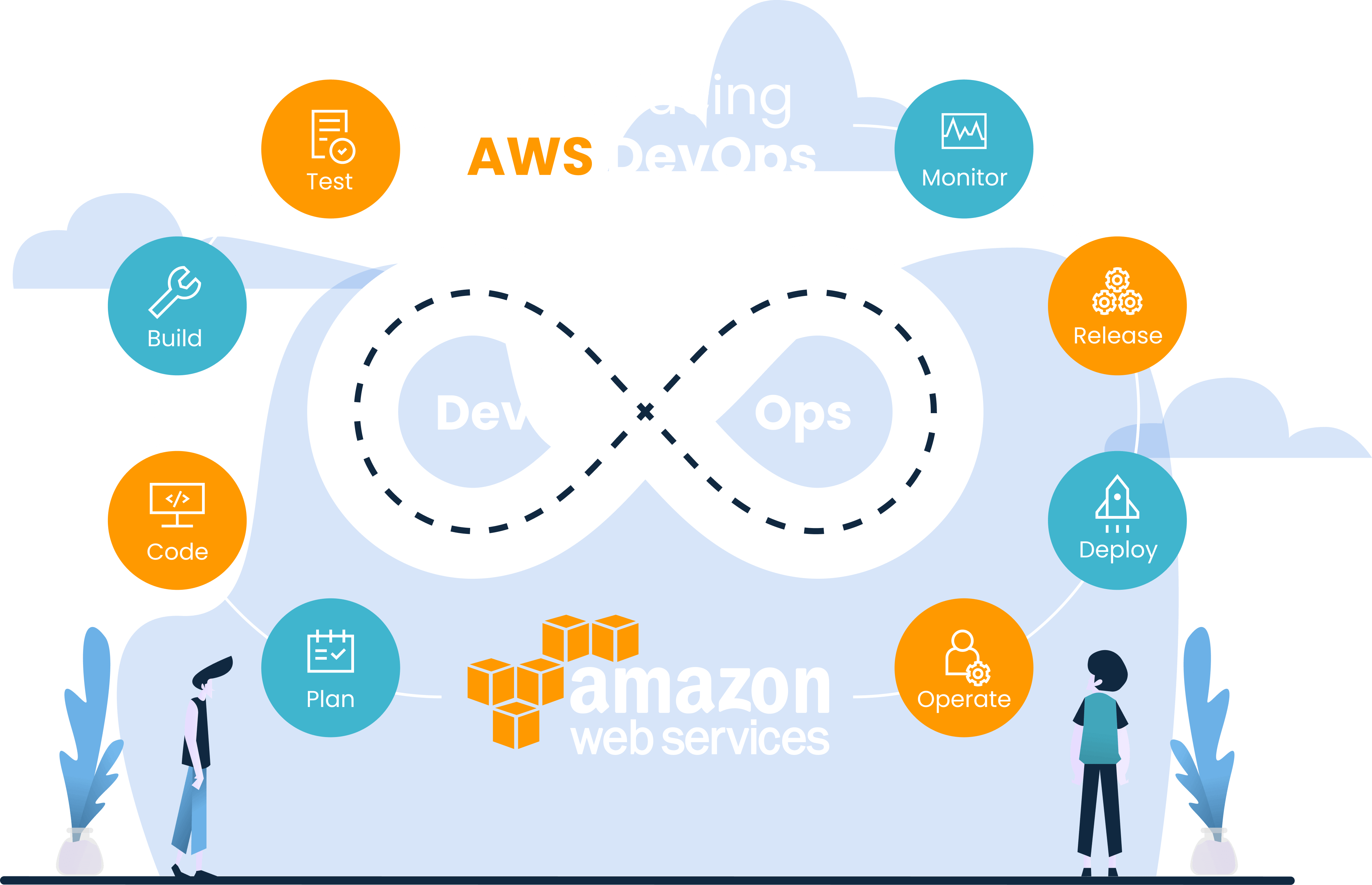
DevOps is a set of practices that combines software development (Dev) and IT operations (Ops). It aims to shorten the systems development life cycle and deliver high-quality software continuously.
Core Principles:
- Automation: Automate as much of the software delivery process as possible to increase efficiency and reliability.
- Collaboration: Foster collaboration and communication between development, operations, and other stakeholders.
- Integration: Integrate continuous feedback loops to continuously improve processes and products.
- Monitoring: Monitor application and infrastructure performance to ensure reliability and availability.
- Infrastructure as Code (IaC): Treat infrastructure as code to enable automated provisioning and management.
AWS (Amazon Web Services)
AWS is a comprehensive cloud computing platform provided by Amazon. It offers a wide range of services that cater to various computing needs, from storage and databases to machine learning and IoT. Here are some key AWS services and concepts:
- Compute Services:
- Amazon EC2 (Elastic Compute Cloud): Virtual servers in the cloud to run applications.
- AWS Lambda: Serverless compute service that runs code in response to events.
- Storage Services:
- Amazon S3 (Simple Storage Service): Object storage service for storing and retrieving data.
- Amazon EBS (Elastic Block Store): Persistent block storage volumes for EC2 instances.
- Database Services:
- Amazon RDS (Relational Database Service): Managed relational databases like MySQL, PostgreSQL, etc.
- Amazon DynamoDB: Managed NoSQL database service.
- Networking:
- Amazon VPC (Virtual Private Cloud): Isolated network environment within the AWS cloud.
- AWS Direct Connect: Establishes a dedicated network connection from your premises to AWS.
- Deployment and Management:
- AWS CloudFormation: Infrastructure as Code service for provisioning and managing AWS resources.
- AWS Elastic Beanstalk: Platform as a Service (PaaS) for deploying and managing applications.
DevOps & AWS
DevOps Practices and AWS Integration
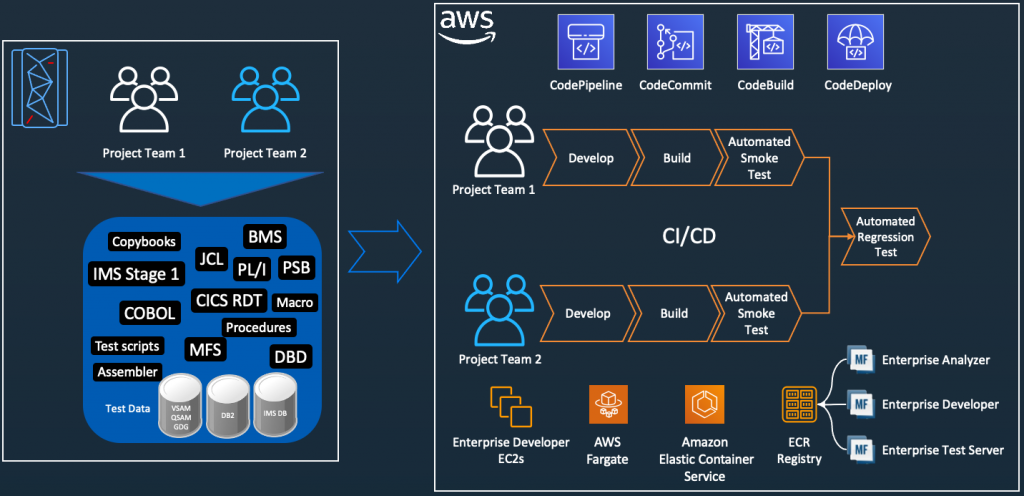
2. Continuous Integration/Continuous Deployment (CI/CD):
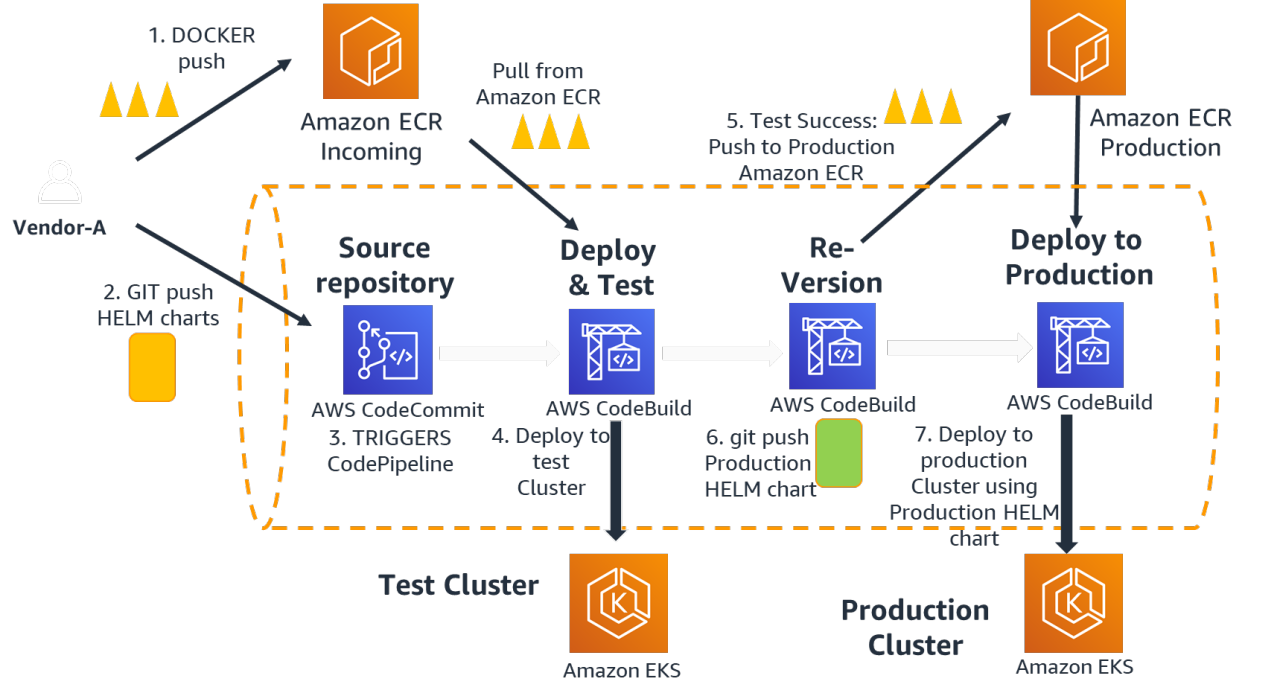
- Use AWS CodePipeline for automating builds, tests, and deployments.
- Integrate with AWS CodeBuild for building applications and Docker containers.
2. Infrastructure as Code (IaC):
- Use AWS CloudFormation or AWS CDK (Cloud Development Kit) to provision and manage AWS infrastructure declaratively.
3. Monitoring and Logging:
- Use AWS CloudWatch for monitoring metrics, setting alarms, and logging.
- Implement AWS X-Ray for distributed tracing of microservices architectures.
4. Security and Compliance:
- Implement AWS Identity and Access Management (IAM) for secure access management.
- Utilize AWS Config for assessing, auditing, and evaluating the configurations of AWS resources.
5. Microservices and Serverless Architectures:
- Deploy microservices using AWS ECS (Elastic Container Service) or Kubernetes on AWS EKS (Elastic Kubernetes Service).
- Leverage AWS Lambda for serverless architectures and event-driven computing.
DevOps & AWS
Advantages of Using AWS in DevOps
- Scalability: Easily scale resources up or down based on demand.
- Cost Efficiency: Pay only for the resources you use with no upfront costs.
- Reliability: AWS offers high availability and fault tolerance built into its services.
- Global Reach: AWS operates in multiple geographic regions, allowing for low-latency access globally.
- Flexibility: Choose from a wide range of services to meet specific application requirements.
Challenges and Future Directions
Complexity: Managing a wide range of AWS services can be complex without proper automation and monitoring.
Security: Ensure proper security measures are in place to protect data and applications.
Cost Management: Monitor and optimize costs to prevent unexpected bills.
In conclusion, combining DevOps practices with AWS services provides organizations with powerful tools to build, deploy, and manage applications efficiently and at scale. It enables agility, reliability, and innovation in software development and operations.