
Python
Python Technology
Python is a high-level, interpreted programming language known for its simplicity, readability, and versatility. It has gained immense popularity across various domains including web development, data science, machine learning, automation, and scientific computing.
Here’s a comprehensive explanation covering Python’s features, applications, syntax, and advantages:
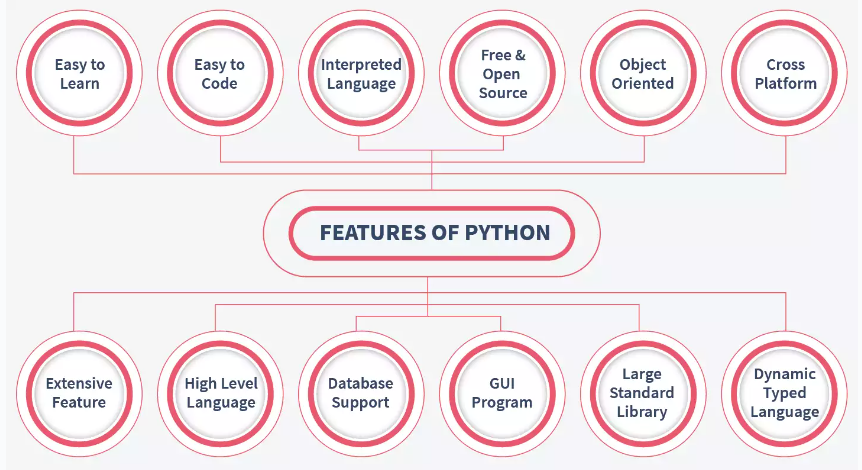
Python - Features & Applications
Features of Python
Applications of Python
- Easy to Read and Write: Python’s syntax emphasizes readability and uses indentation to define code blocks, making it easier to write and understand code.
- Interpreted Language: Python code is executed line by line by the Python interpreter without the need for compilation, facilitating rapid prototyping and development.
- Dynamically Typed: Python is dynamically typed, meaning variables can change types as needed during execution. Type annotations (introduced in Python 3.5+) provide optional static typing.
- Object-Oriented and Procedural: Python supports both object-oriented and procedural programming paradigms, allowing developers to structure programs using classes, objects, and functions.
- Extensive Standard Library: Python comes with a vast standard library that includes modules and packages for various tasks such as file I/O, networking, regular expressions, and data manipulation.
- Cross-platform: Python is available on multiple platforms including Windows, macOS, and Linux, ensuring compatibility across different operating systems.
- Large Ecosystem: Python has a rich ecosystem of third-party libraries and frameworks, such as Django for web development, NumPy for scientific computing, TensorFlow for machine learning, and pandas for data analysis.
- Integration Capabilities: Python can easily integrate with other languages and tools, enabling interoperability with C/C++, Java, and .NET frameworks.
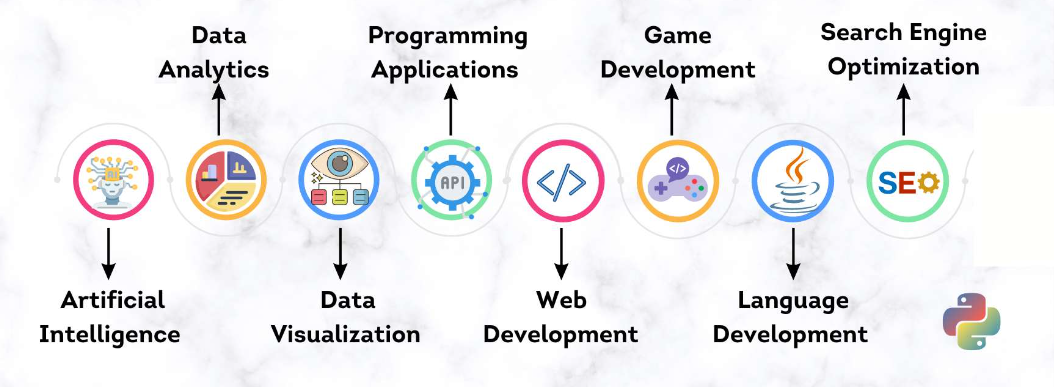
- Web Development: Python frameworks like Django and Flask are used to build scalable and maintainable web applications. Django provides a full-featured MVC (Model-View-Controller) framework, while Flask is lightweight and flexible.
- Data Science and Machine Learning: Python is the language of choice for data analysis, visualization, and machine learning. Libraries like NumPy, pandas, Matplotlib, and scikit-learn are extensively used for data manipulation, exploration, and predictive modeling.
- Scientific Computing: Python, along with libraries like SciPy and SymPy, supports scientific computing tasks such as simulations, mathematical computations, and plotting.
- Automation and Scripting: Python is widely used for scripting and automation of repetitive tasks, system administration, and deployment tasks.
- Desktop GUI Applications: Python’s GUI frameworks like Tkinter, PyQt, and wxPython allow developers to create cross-platform desktop applications with graphical interfaces.
- Game Development: Python is used for game scripting, AI programming, and prototyping in game development. Libraries like Pygame facilitate game development with Python.
- Education: Python’s simplicity and readability make it an ideal language for teaching programming concepts to beginners and students.
Python
Advantages of Python
Readability and Simplicity: Python's clean syntax and readability reduce the cost of program maintenance and development time.
Versatility: Python's extensive standard library and third-party packages support a wide range of applications, making it suitable for diverse projects.
Community and Support: Python has a large and active community of developers who contribute to its ecosystem, provide support, and share knowledge through forums, conferences, and online resources.
Scalability: Python's flexibility and scalability enable it to handle small scripts to large-scale applications and systems.
Conclusion
Python’s versatility, ease of use, and robust community support have made it a preferred choice for developers across industries. Whether you are developing web applications, analyzing data, building machine learning models, or automating tasks, Python provides powerful tools and libraries to help you achieve your goals efficiently. Its continued popularity and adoption highlight its importance in modern software development and technological innovation.