
Application development
Custom Software Application Development
Application development refers to the process of creating software applications that serve specific purposes or solve particular problems for users. It involves various stages from conceptualization to deployment and maintenance.
Here’s a comprehensive explanation of application development covering its key aspects:
Key Stages of Application Development
1. Conceptualization and Planning:
- Ideation: Generating and refining ideas for the application based on user needs or market opportunities.
- Requirements Gathering: Defining functional and non-functional requirements that the application must fulfill.
- Feasibility Analysis: Assessing technical, economic, and operational feasibility of the project.
2. Design:
- UI/UX Design: Creating wireframes, prototypes, and user interface designs to ensure intuitive and engaging user experiences.
- Architecture Design: Planning the software architecture, including database schema, backend services, and frontend components.
3. Development:
- Frontend Development: Writing code for the user-facing parts of the application using technologies like HTML/CSS, JavaScript, and frontend frameworks/libraries (e.g., React, Angular, Vue.js).
- Backend Development: Developing server-side logic, APIs, and database integration using languages like Python, Java, Node.js, or frameworks like Django, Spring Boot, Express.js.
- Integration: Connecting different components of the application (frontend, backend, databases, external APIs) to ensure seamless functionality.
4. Testing:
- Unit Testing: Testing individual components or modules to ensure they function correctly.
Integration Testing: Verifying that different parts of the application work together as expected. - User Acceptance Testing (UAT): Testing with end-users to validate the application meets their requirements and usability expectations.
- Performance Testing: Assessing how the application performs under various conditions (e.g., load testing, stress testing).
5. Deployment:
- Release Management: Preparing the application for deployment, including configuration management and version control.
- Deployment: Installing the application on production servers or cloud platforms (e.g., AWS, Azure, Google Cloud).
- Monitoring: Setting up monitoring tools to track application performance, detect issues, and ensure uptime.
6. Maintenance and Updates:
- Bug Fixes: Addressing issues discovered post-deployment through patches or updates.
- Feature Updates: Adding new features or enhancing existing ones based on user feedback or business needs.
- Security Updates: Implementing security patches and updates to protect against vulnerabilities.
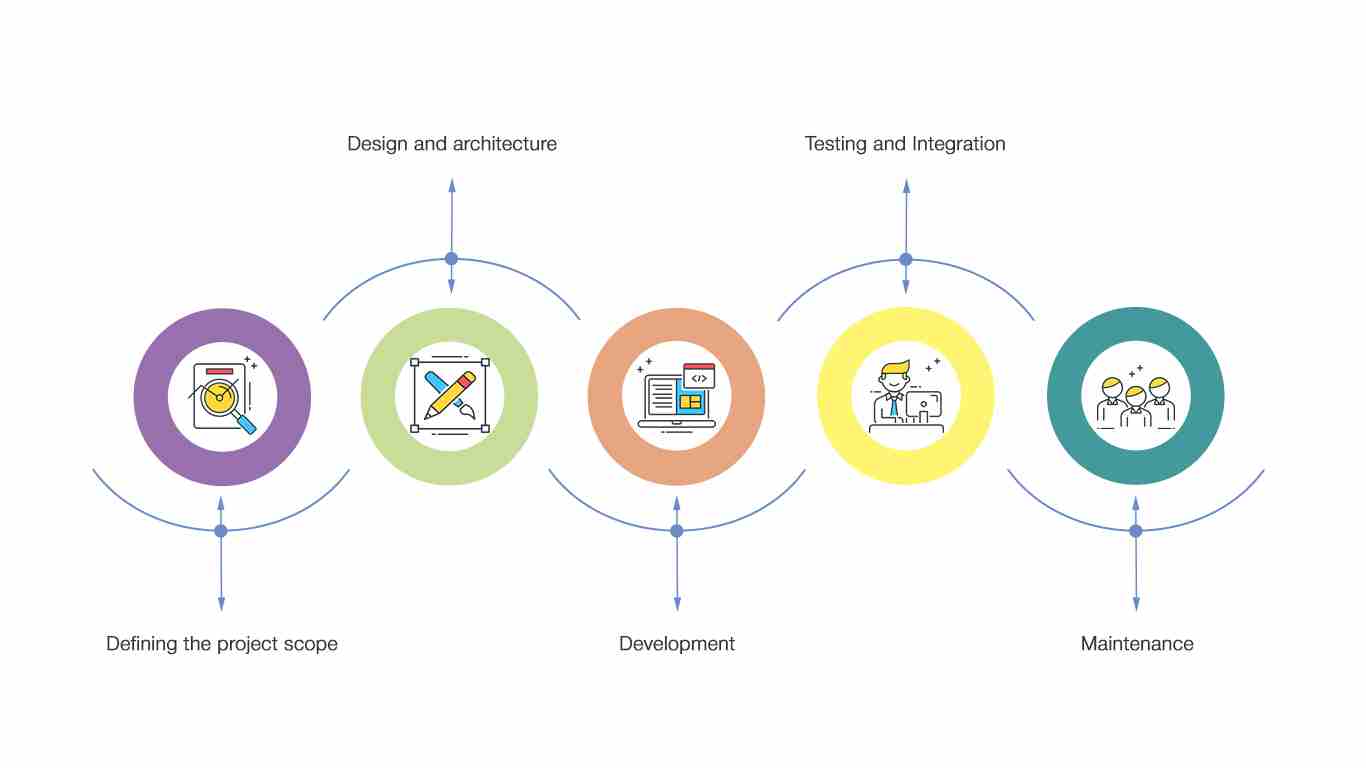
Custom Software Application Development
Wide-Ranging Applications
Application development spans various domains and industries, each requiring tailored solutions to meet specific needs:
- Enterprise Applications: ERP systems, CRM software, and business intelligence tools.
- Consumer Applications: Social media platforms, e-commerce apps, and entertainment apps.
- Healthcare Applications: Electronic health records (EHR), telemedicine solutions, and fitness tracking apps.
- Finance Applications: Banking apps, payment gateways, and investment platforms.
- Education Applications: E-learning platforms, student management systems, and educational games.
- Gaming Applications: Mobile games, console games, and online multiplayer games.
- IoT Applications: Smart home devices, wearable technology, and industrial IoT solutions.
- Emerging Technologies: Applications leveraging AI/ML, AR/VR, blockchain, and edge computing.
Challenges and Future Directions
Platform Diversity: Developing for multiple platforms (e.g., iOS, Android, web) while ensuring consistent user experiences.
Security Concerns: Protecting sensitive user data and ensuring compliance with data protection regulations (e.g., GDPR, CCPA).
User Experience (UX): Designing intuitive interfaces that cater to diverse user demographics and accessibility requirements.
Rapid Technological Advancements: Adopting new technologies and frameworks to stay competitive and meet evolving user expectations.
Agile Development: Embracing agile methodologies to iterate quickly, respond to changes, and deliver value incrementally.
Cross-Platform Development: Using tools and frameworks like Flutter, React Native, and Xamarin to develop applications that run on multiple platforms with minimal code duplication.
In conclusion, application development is a dynamic process that involves collaboration among designers, developers, testers, and stakeholders to create software solutions that address specific business or user needs. The continuous evolution of technology ensures that developers must stay adaptable and innovative to deliver impactful and reliable applications across diverse industries and use cases.